Ask 'what's driving margin down this quarter?' in plain language and get an answer in seconds. No ticket, no waiting for the deck. Drill into the next question in the same chat, and send any answer to a live Google Sheet.
↓ A real CEO, mid-conversation. Try it — click anything.
You ask for a revenue number. Someone pulls it from a dashboard, a CSV, or ChatGPT. A week later you find out the number was wrong – or that marketing and finance had different versions of the same revenue... Sound familiar?
You don’t need a bigger data team. You need a system that makes data accessible to everyone.
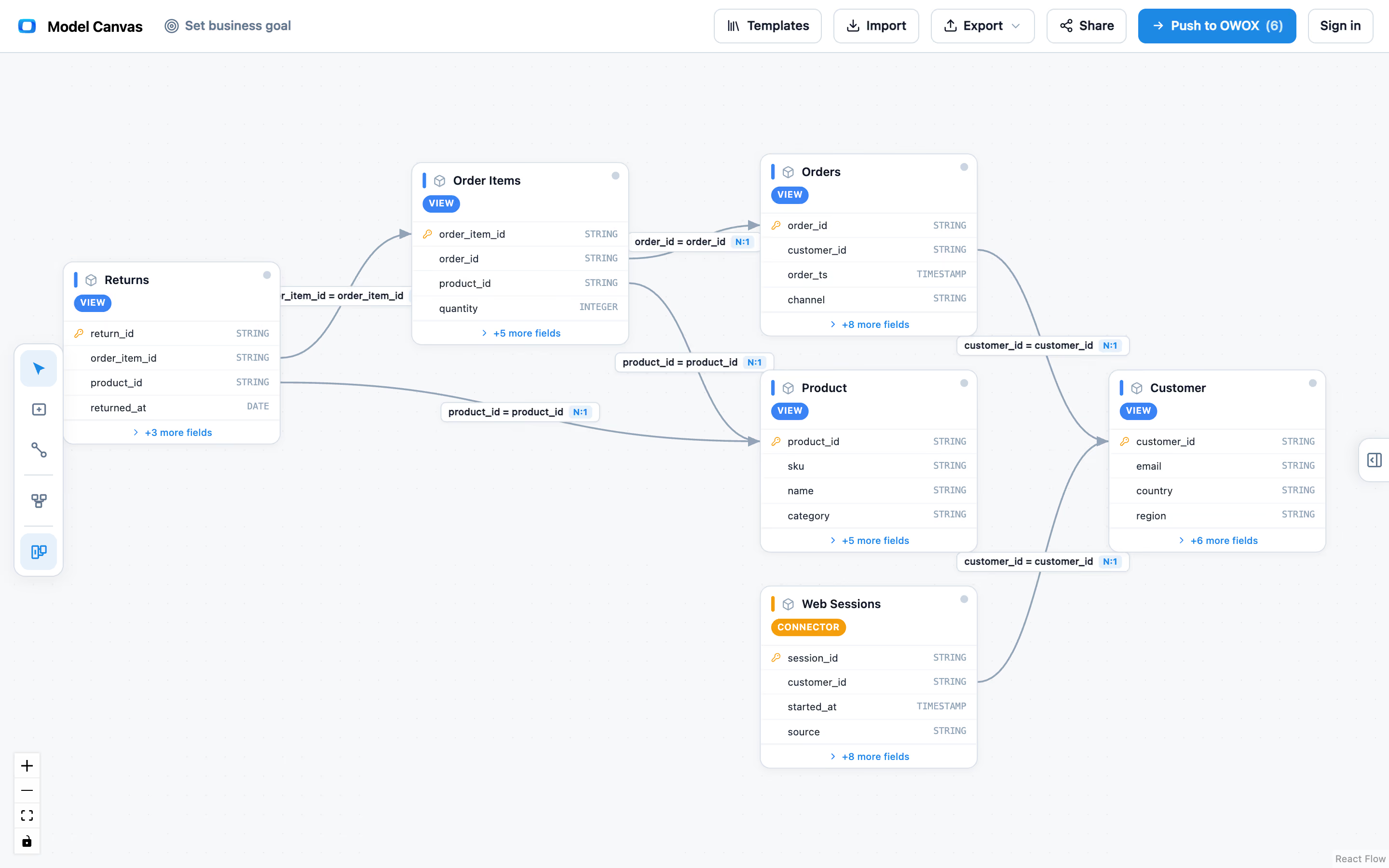
Get started free →Your analyst (or your most technical team member) picks tables from the data warehouse and builds a library with one click.
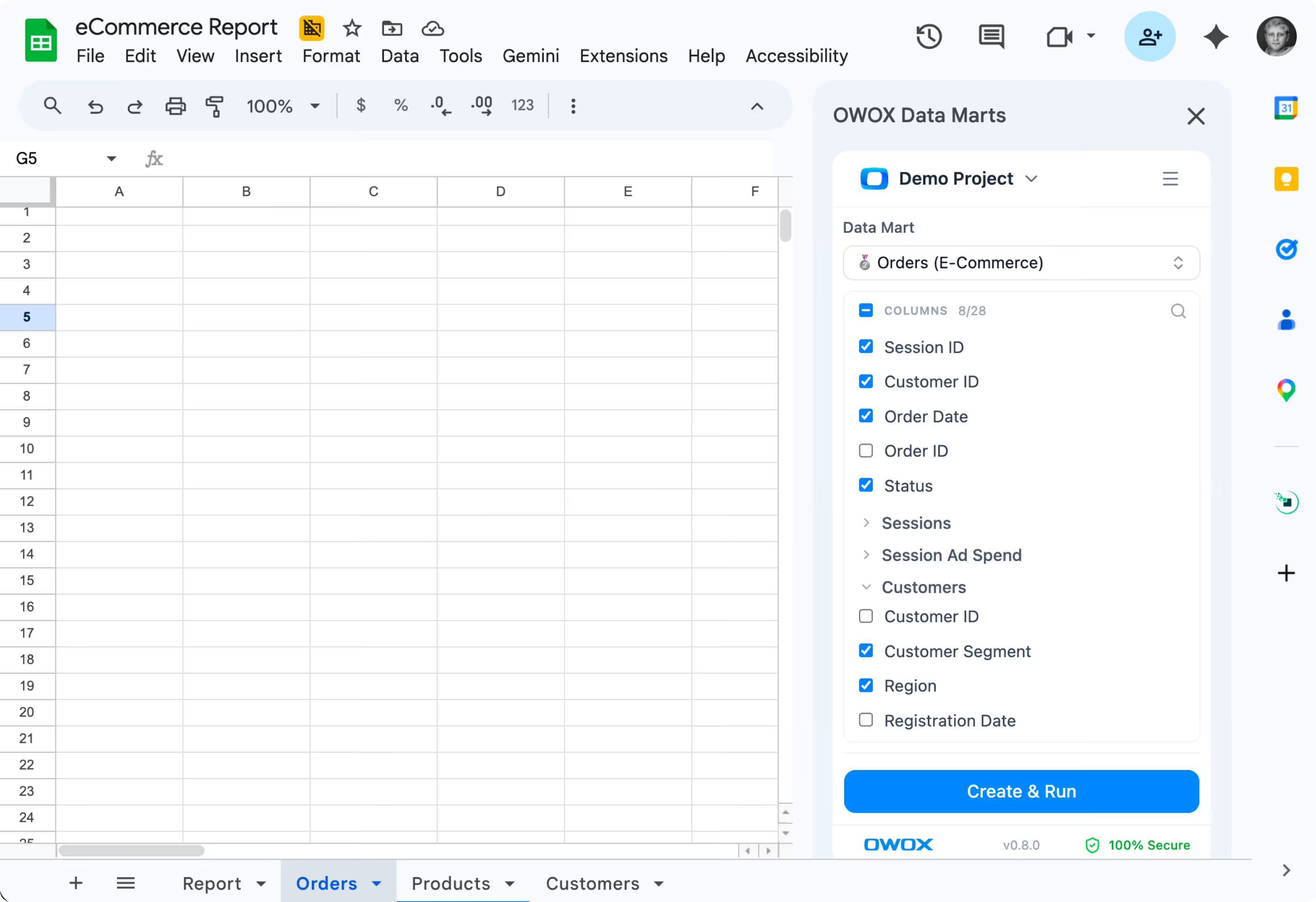

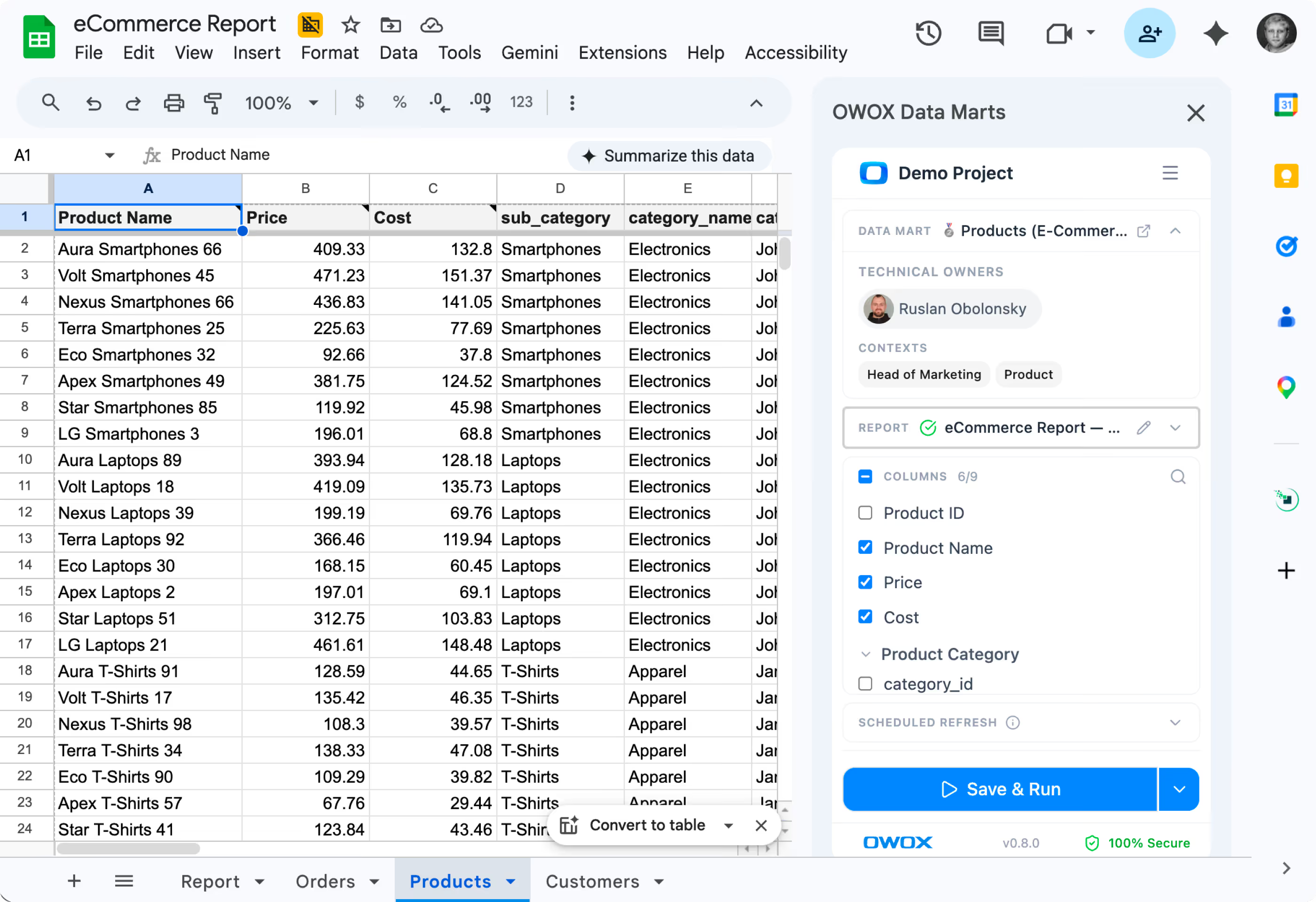
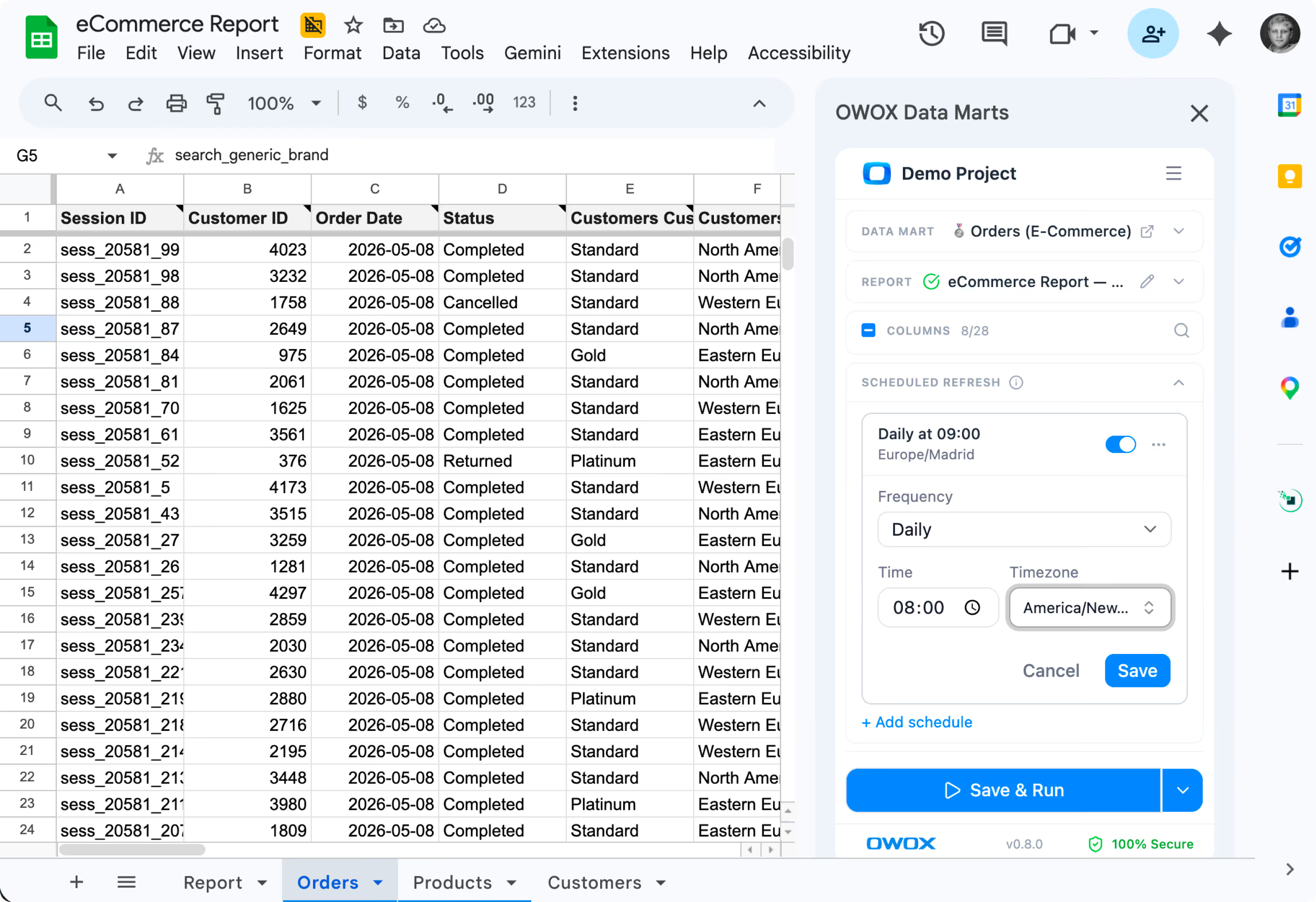
Your CMO, CFO, and product lead each browse the governed library in Google Sheets — business-friendly names, trusted numbers, no tickets.

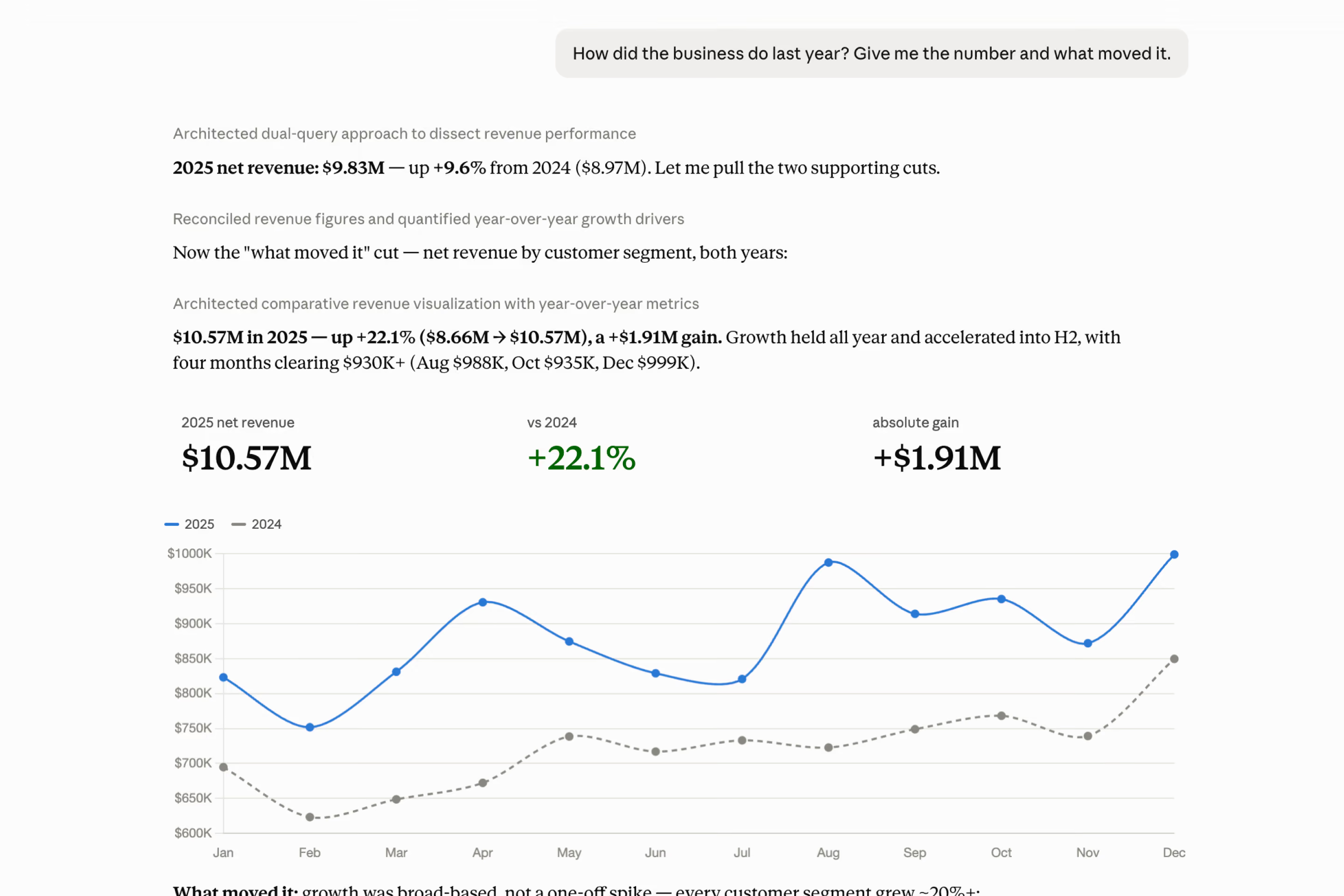
Revenue, margin, what's really driving growth — right inside Claude, ChatGPT, or Slack, and get an answer you can act on.

Your data team connects the warehouse and builds the library once.
You stop asking people for numbers. Forever.
Your analyst sets it up once. You get executive briefings on schedule. No more asking people for data.
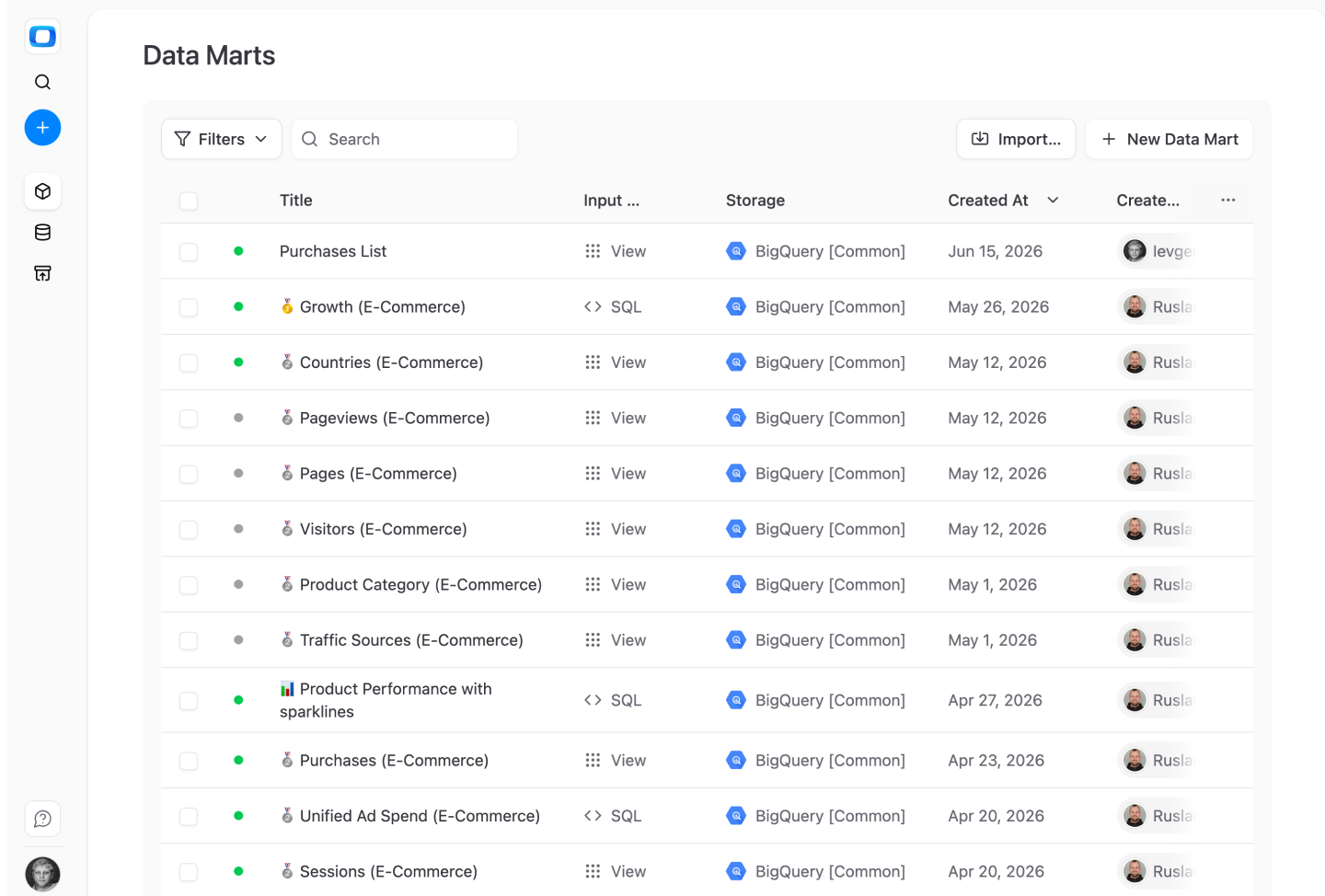
Connect data warehouse, pick tables, one-click populates data assets. Takes minutes, not months.
Marketing, finance, ops — everyone browses the library from Sheets, picks columns, and set refreshes.
You ask, and get answers — in Claude, ChatGPT, or Slack; every number traces to the SQL your analyst approved


When every team member has access to governed data, the company moves faster.
Ask a question in your chat and get a trusted answer in seconds; your team self-serves in Sheets all week
Marketing and finance report the same revenue number because they pull from the same Data Mart. No more reconciliations.
A Reporting Analyst starts at $65/month. A new analyst hire costs $80–120K/year and takes three months to ramp up...
Organizations that scaled analytics without scaling headcount
our data team sets up a Reporting Analyst once: it builds the governed library every team self-serves from, and powers your Monday brief. When you want to ask "why did revenue dip last week?" in plain language, the Senior Analyst answers in Claude, or ChatGPT — traceable to SQL, never hallucinated.
Not a team — a person. Your most technical team member — an analyst, a marketing-ops lead, even a technically confident marketing manager — connects the warehouse (BigQuery has a generous free tier), picks tables, one-click populates the Data Mart library, and publishes it, usually in an afternoon. From that point on, everyone in the company self-serves: they ask their business a question in their own AI chat — Claude, ChatGPT, or Slack — or pull the numbers in Google Sheets. No new tool to learn. If you have zero technical people, we'll walk you through setup in a 30-minute demo — but if your company uses Google Sheets and runs ad campaigns, someone on your team can handle this.
This is the core difference between OWOX and every "AI analytics" tool your team has been pasting into Slack. When someone asks ChatGPT "what's our ROAS?", the LLM writes a query on the fly — different every time, potentially wrong, impossible to verify. OWOX works the opposite way: your analyst defines the SQL, approves the logic, and publishes it as a Data Mart. When you ask a question in your own AI chat, every number in the answer is the result of that pre-approved SQL running against your real warehouse data — the AI narrates, but it never writes the query or invents a join. The numbers are deterministic: same question, same result, every time. Patented technology. Every number traces back to SQL your team approved.
OWOX starts at $65/mo . That includes connectors (pull ad-platform data into your warehouse), Data Mart management (govern and join your data), and the Google Sheets Extension. For context: a freelance analyst charges $75–150/hour; a full-time analyst is $80–120K/year plus three months to ramp. OWOX scales to every team member for less than a business lunch. Higher tiers add MCP — ask your business in Claude, ChatGPT, or Slack — plus multi-destination delivery and SLA. Enterprise is custom.
Because ChatGPT makes up numbers and your marketing lead can't tell the difference. It writes SQL on the fly, joins tables it shouldn't, hallucinates columns that don't exist, and gives a different answer every time. One wrong number in a board deck is all it takes. OWOX gives your marketing lead the same ask-in-your-AI-chat experience — that's exactly what MCP is — but the answer comes from governed Data Marts with analyst-approved SQL. Every cell is deterministic, every join follows pre-defined keys, no hallucinations, same answer every time. Your marketing lead gets speed; you get trust.
Your first Data Mart takes minutes. A useful library covering your core metrics — revenue, CAC, pipeline, campaign performance — can be built in a day or two. Your team sees the library in Google Sheets immediately after publishing, and you can ask your first question in your own AI chat the same day. This isn't a six-month project — no implementation phase, no professional-services engagement, no migration. Connect the warehouse, build the library, publish it. Done.
You need a warehouse, but getting one is easier than you think. Google BigQuery has a free tier that covers most small-company volumes — 10GB storage, 1TB queries/month, no credit card. Your marketing-ops person or a freelance analyst can set it up in an afternoon, and OWOX connectors pull your ad-platform data in automatically. Already on Snowflake, Databricks, Redshift, or Athena? OWOX connects to all of them. Your data stays in your warehouse — OWOX reads from it, never copies it — so nothing you ask ever leaves your control.
Connect your data, build the library, and ask your business in your own AI chat – with zero hallucinations
Walk through the platform with a data strategist. See how your company’s data flows from the source to a traced answer in your AI chat.